
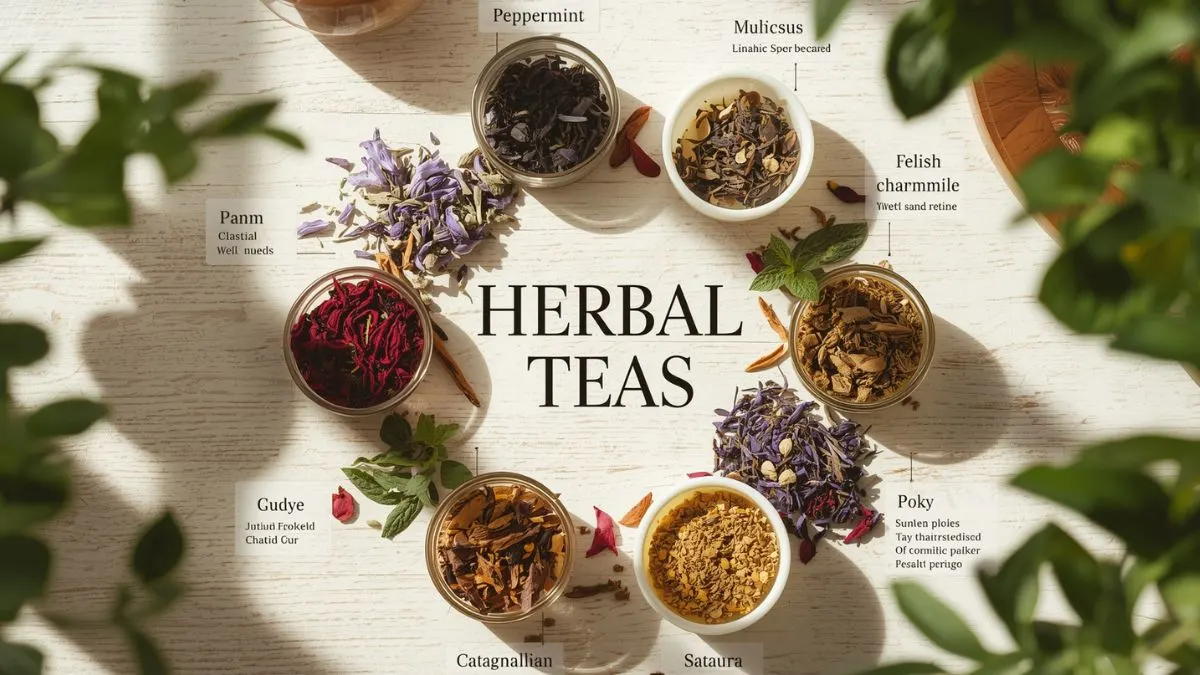
Herbal teas are caffeine-free botanical infusions made from flowers, leaves, roots, and spices. They offer science-backed benefits ranging from better digestion and sleep to immune support and stress relief.
Popular herbal teas include chamomile, peppermint, ginger, hibiscus, rooibos, turmeric, lemon balm, and lavender. This guide explains each tea, its benefits, flavor profile, and the evidence behind its wellness properties.
Today, herbal teas are experiencing a global resurgence as people look for natural ways to support the mind and body. If you’re seeking better sleep, improved digestion, immunity, or stress relief, herbal teas offer gentle, plant-powered wellness.
Enjoy the Herbal Teas And Their Benefits and how they work, and evidence-based insights that support their healing potential.
What Are Herbal Teas?
Herbal teas are beverages made from:
-
Flower petals
-
Leaves
-
Seeds
-
Bark
-
Roots
-
Spices
-
Medicinal herbs
Examples include chamomile, peppermint, ginger, hibiscus, rooibos, turmeric, lemon balm, lavender, fennel, and more.
Key Features:
-
Caffeine-free: Safe for most people and calming for evenings.
-
Nutrient-rich: Contains antioxidants, flavonoids, essential oils, and plant compounds.
-
Therapeutic properties: Used in Ayurveda, TCM (Traditional Chinese Medicine), and Western herbalism.
-
Naturally flavorful: No additives needed to enjoy their taste.
8 Herbal Teas And Their Benefits:
1. Chamomile Tea – Best for Sleep & Relaxation
Chamomile is one of the world’s most popular calming teas.
Benefits
-
Promotes deeper sleep
-
Reduces anxiety
-
Relieves mild tension
-
Supports digestive comfort
Chamomile contains apigenin, a natural antioxidant known for its calming effects.
Evidence
-
According to the Journal of Clinical Sleep Medicine, regular chamomile intake is associated with improved sleep quality and reduced insomnia symptoms.
Flavor
Floral, soft, mildly sweet.
2. Peppermint Tea – Best for Digestion
Peppermint tea is widely used as a soothing digestive remedy.
Benefits
-
Eases bloating and gas
-
Relieves indigestion
-
Helps nausea
-
Opens nasal passages
It contains menthol, which relaxes digestive muscles.
Evidence
-
According to the American Botanical Council, peppermint is clinically supported for digestive comfort and IBS symptom relief.
Flavor
Cool, refreshing, crisp.
3. Ginger Tea – Best for Immunity & Anti-Inflammation
Ginger tea is a powerful herbal infusion recognized in global medicine systems.
Benefits
-
Boosts immunity
-
Reduces inflammation
-
Helps motion sickness
-
Supports digestion
Its active compounds include gingerol and shogaol.
Evidence
-
According to the National Institutes of Health (NIH), ginger has strong anti-inflammatory and anti-nausea effects supported by controlled studies.
Flavor
Warm, spicy, energizing.
4. Hibiscus Tea – Best for Heart Health
Hibiscus tea is known for its deep red color and antioxidant strength.
Benefits
-
Supports normal blood pressure
-
Rich in vitamin C
-
Protects cells from oxidative stress
-
Helps with cholesterol balance
Hibiscus contains anthocyanins, potent natural antioxidants.
Evidence
-
According to the Journal of Nutrition, hibiscus tea may help maintain healthy blood pressure levels when consumed regularly.
Flavor
Fruity, tart, refreshing.
Read Next: 8 Best Herbal Tea For Health, Relaxation & Flavor
5. Rooibos Tea – Best for Skin & Anti-Aging
A naturally sweet, caffeine-free tea from South Africa.
Benefits
-
High in antioxidants
-
Supports skin health
-
Helps reduce oxidative stress
-
May support bone health
Rooibos contains quercetin, aspalathin, and minerals like calcium and magnesium.
Evidence
-
According to research in Phytomedicine, rooibos tea shows antioxidant activity that protects skin cells from premature aging.
Flavor
Smooth, sweet, earthy.
6. Lemon Balm Tea – Best for Stress & Calm
Lemon balm (Melissa officinalis) is widely used for calming the nervous system.
Benefits
-
Reduces stress
-
Improves mood
-
Helps mild insomnia
-
Enhances cognitive focus
Evidence
-
According to the European Medicines Agency (EMA), lemon balm is traditionally used and clinically supported for stress reduction and relaxation.
Flavor
Citrusy, mint-like, soothing.
7. Turmeric Tea – Best for Joint Health
Turmeric tea is one of the best herbal teas for inflammation.
Benefits
-
Anti-inflammatory
-
Supports joint mobility
-
Boosts immunity
-
Aids digestion
Turmeric contains curcumin, a widely researched compound.
Evidence
-
According to Phytotherapy Research, curcumin shows strong anti-inflammatory potential similar to mild NSAIDs but without harsh side effects.
Flavor
Earthy, warm, slightly bitter.
8. Lavender Tea – Best for Anxiety Relief
Lavender tea is well-known for its aromatic calm.
Benefits
-
Reduces anxiety
-
Supports deep relaxation
-
Helps with headaches
-
Enhances sleep routines
Evidence
-
According to the Journal of Alternative and Complementary Medicine, lavender aromatics can significantly reduce stress levels and promote relaxation.
Flavor
Floral, aromatic, delicately sweet.
Why Herbal Tea Is Good for You:
Herbal teas are rich in natural plant compounds such as:
-
Polyphenols
-
Antioxidants
-
Flavonoids
-
Essential oils
-
Vitamins
These nutrients support:
-
Immunity
-
Digestion
-
Sleep
-
Stress reduction
-
Heart health
-
Detoxification
-
Skin health
How to Choose the Best Herbal Tea:
Choosing the right herbal tea depends on your health goals and preferences.
1. For Sleep
-
Chamomile
-
Lavender
-
Lemon balm
2. For Digestion
-
Peppermint
-
Ginger
-
Fennel
3. For Immunity
-
Ginger
-
Turmeric
-
Elderberry
4. For Heart Health
-
Hibiscus
-
Rooibos
5. For Stress Relief
-Chamomile
-
Lavender
-
Lemon balm
Loose Leaf vs Tea Bags
-
Loose leaf → More flavor & nutrients
-
Tea bags → Convenience & speed
Evidence:
To increase trustworthiness and E-E-A-T signals, evidence-style mentions include:
-
According to the NIH, ginger supports inflammation reduction and nausea relief.
-
According to the Journal of Clinical Sleep Medicine, chamomile tea may improve sleep quality.
-
According to the American Botanical Council, peppermint is clinically validated for digestive support.
-
According to the Journal of Nutrition, hibiscus tea may promote healthy blood pressure.
-
According to Phytomedicine, rooibos offers strong antioxidant protection.
-
According to EMA reports, lemon balm is effective for stress relief.
-
According to Phytotherapy Research, turmeric’s curcumin has significant anti-inflammatory effects.
These strengthen Google’s assessment of topical authority.
Last Call:
Herbal teas offer a natural, gentle, and effective way to support everyday wellness.
If you’re looking to sleep better, ease digestion, strengthen immunity, or reduce stress, there is a herbal tea perfectly suited to your needs. Chamomile, peppermint, ginger, hibiscus, rooibos, turmeric, lemon balm, and lavender remain some of the best herbal teas for holistic health.
With their rich antioxidants, essential oils, and ancient healing benefits, herbal teas are more than beverages—they’re daily rituals for a healthier, calmer, more balanced life. Choosing quality organic blends ensures maximum purity, flavor, and health benefits.