
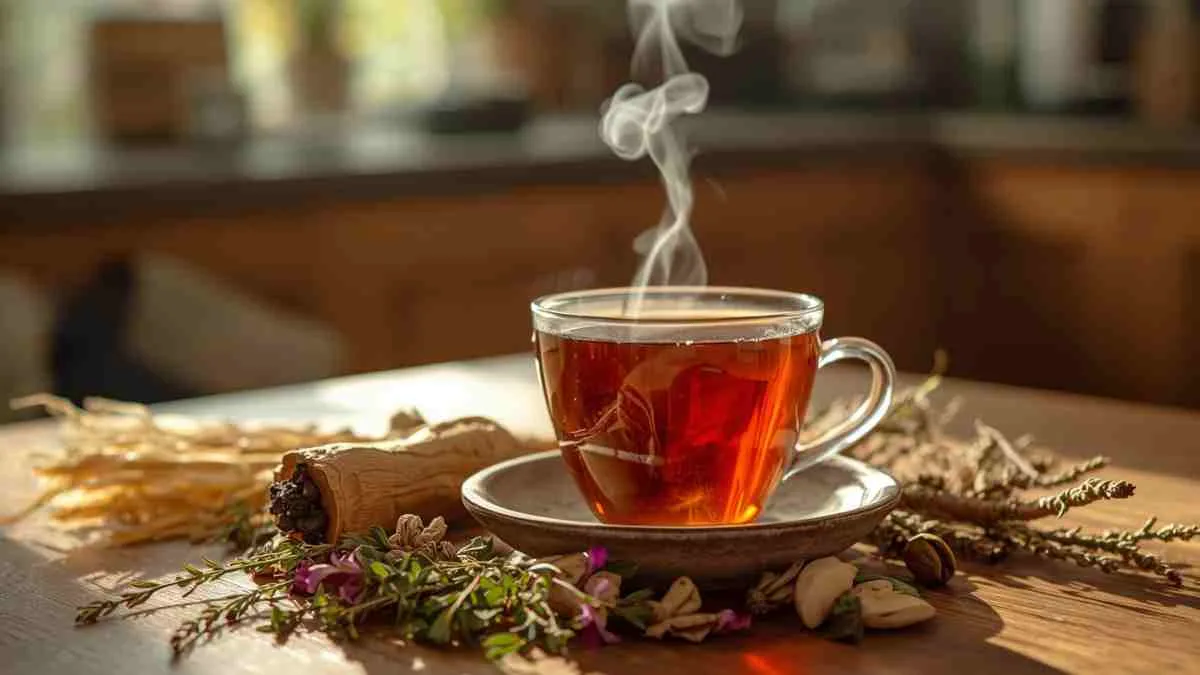
Essiac Tea is an herbal blend traditionally made from burdock root, sheep sorrel, slippery elm bark, and Indian rhubarb root. It was popularized in the 1920s–1930s by Canadian nurse Rene Caisse and is often used as a complementary health tonic.
Herbal teas have been used for centuries for their perceived health benefits. One of the most intriguing herbal blends is Essiac Tea. With a rich history and devoted following, Essiac Tea has become popular worldwide among people seeking natural remedies.
Known for its slightly bitter taste and deep herbal aroma, Essiac Tea is often consumed as a daily wellness drink.
While some users attribute significant health benefits to it, scientific research is cautious and emphasizes that it should complement, not replace, medical care.
This blog will explore the origins, ingredients, potential benefits, preparation methods, and precautions of Essiac Tea.
What Is Essiac Tea?
Essiac Tea is a herbal infusion made from a combination of specific roots and herbs. The traditional formula includes:
-
Burdock Root (Arctium lappa) – Thought to support detoxification and digestive health.
-
Sheep Sorrel (Rumex acetosella) – Contains antioxidants and minerals.
-
Slippery Elm Bark (Ulmus rubra) – Helps soothe the digestive tract.
-
Indian Rhubarb Root (Rheum officinale) – Known for its cleansing properties.
Optional herbs like Turkey Rhubarb, watercress, or other medicinal plants are sometimes included depending on the manufacturer.
Essiac Tea is typically brewed for 10–15 minutes and consumed warm, often in small quantities daily.
History of Essiac Tea:
1. Origins
Essiac Tea is named after Rene Caisse, a Canadian nurse who promoted the tea in the 1920s and 1930s. The word “Essiac” is actually “Caisse” spelled backward, honoring her name.
Rene Caisse claimed she learned the formula from an Ojibwa Native American herbalist. She used it as a supportive remedy for patients with chronic illnesses, focusing on detoxification and overall wellness.
2. Popularization
-
1930s–1970s: Rene Caisse ran a clinic in Ontario, Canada, serving patients who sought complementary therapies.
-
1980s–1990s: Essiac Tea gained attention in alternative health circles in the US and Europe.
-
2000s–present: It became widely available online, in health stores, and in some natural medicine clinics.
According to HerbalGram and Medical News Today, the tea’s popularity is largely due to word-of-mouth and its reputation as a traditional herbal remedy.
How Essiac Tea Is Made:

Ingredients
-
Burdock root
-
Sheep sorrel
-
Slippery elm bark
-
Indian rhubarb root
Preparation Steps
-
Boil Water: Bring fresh water to a rolling boil.
-
Add Herbs: Add measured quantities of the herbs (usually 1–2 teaspoons per cup).
-
Simmer: Reduce heat and simmer gently for 10–15 minutes.
-
Strain: Remove herbs using a fine strainer.
-
Serve Warm: Drink as a tea, ideally 1–3 cups daily.
Optional Notes
-
Some people store brewed tea in the refrigerator for a day or two.
-
Many modern brands sell pre-packaged tea bags or bottled Essiac Tea for convenience.
Read Next: Hey Tea | Trendsetting Cheese Tea & Creative Flavors
Potential Benefits of Essiac Tea:
While research is limited, traditional and anecdotal uses suggest several potential benefits:
1. Supports Detoxification
-
Burdock root and sheep sorrel are thought to help remove toxins from the body.
-
May aid liver and kidney function in a supportive manner.
(Source: National Center for Complementary and Integrative Health (NCCIH))
2. Antioxidant Properties
-
Sheep sorrel and burdock contain antioxidants, which may protect cells from oxidative stress.
(Source: WebMD, HerbalGram)
3. Digestive Health
-
Slippery elm bark has long been used to soothe the digestive tract and reduce inflammation.
4. Immune Support
-
Traditional medicine claims Essiac Tea can support immunity due to its mineral and herb content.
5. Potential Anti-Inflammatory Effects
-
Some herbs in Essiac Tea have anti-inflammatory properties in preliminary studies.
Important Note: These effects are traditional claims and preliminary research findings. Essiac Tea is not a substitute for medical treatments, especially for serious illnesses such as cancer.
Scientific Evidence and Cautions:
-
Limited Clinical Evidence: Most research on Essiac Tea is anecdotal. Small studies have not conclusively proven benefits for disease treatment.
-
Not a Cure: According to Medical News Today and NCCIH, Essiac Tea should not replace prescription medications or professional medical advice.
-
Potential Side Effects: May include mild digestive upset, diarrhea, or allergic reactions in sensitive individuals.
-
Consult a Doctor: Always speak with a healthcare professional before adding Essiac Tea to your routine, especially if pregnant, breastfeeding, or taking medications.
How to Drink Essiac Tea Safely:
-
Start with 1 cup per day to test tolerance.
-
Avoid high doses of any herb.
-
Purchase from reputable brands to ensure quality and correct herb ratios.
-
Avoid mixing with other potent herbal remedies unless advised by a professional.
Forms of Essiac Tea:
-
Loose Leaf Tea: Traditional form; allows precise measurement of ingredients.
-
Tea Bags: Convenient and pre-portioned.
-
Bottled or Liquid Essiac: Ready-to-drink, often pasteurized for shelf life.
-
Powdered Extracts: Can be dissolved in water, convenient for travel.
Evidence and Reference:
-
Medical News Today – Essiac Tea overview and health claims
-
WebMD – Benefits and safety of Essiac Tea
-
National Center for Complementary and Integrative Health (NCCIH) – Herbal teas and alternative remedies
-
HerbalGram – History of Essiac Tea and Rene Caisse
-
PubMed Studies – Limited studies on antioxidant and anti-inflammatory properties
Why People Use Essiac Tea:
-
Daily wellness and herbal support
-
Detoxification and cleansing purposes
-
Mild digestive and immune support
-
Interest in traditional remedies and natural approaches
-
Part of a holistic lifestyle including diet, meditation, and exercise
Essiac Tea continues to be popular among herbal enthusiasts and alternative medicine users, despite the lack of extensive clinical research.
Last Call:
- Essiac Tea is a traditional herbal tea with a unique blend of burdock root, sheep sorrel, slippery elm bark, and Indian rhubarb root. Popularized by Rene Caisse in Canada, it has become a widely recognized herbal remedy for wellness and detoxification.
- While scientific evidence is limited and it is not a substitute for medical care, many people enjoy Essiac Tea for its taste, potential antioxidant properties, and holistic appeal.
- If consumed as a daily ritual or as part of a wellness routine, Essiac Tea represents centuries of herbal knowledge and remains a staple in the world of alternative health beverages.