

Black tea and green tea both come from the same plant, Camellia sinensis, but the way they are processed makes them very different.
Green tea is not oxidized, so it stays light in flavor and high in catechins like EGCG. Black tea is
Tea has been an important drink in many cultures for thousands of years.
Two of the most widely consumed teas are black tea and green tea. Even though they taste, look, and feel different, both come from the leaves of the Camellia sinensis plant.
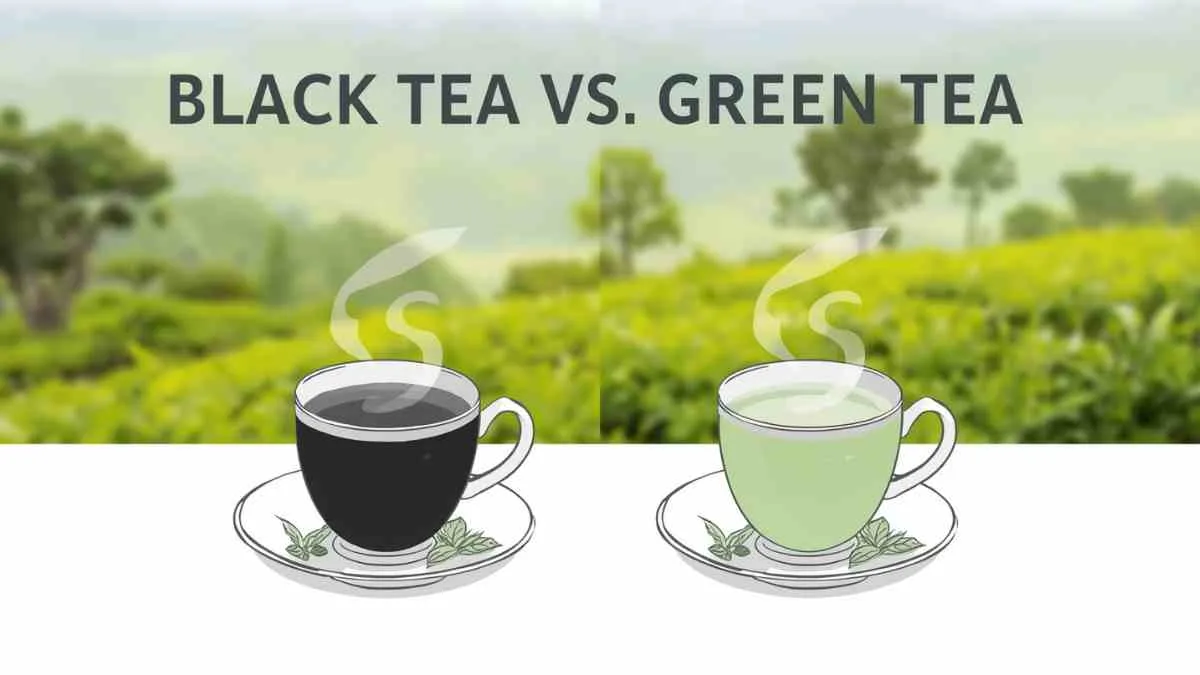
Black Tea vs Green Tea is how the leaves are heated and processed after being picked. This simple detail changes their flavor, color, caffeine level, and antioxidant profile.
This article explains the differences between black tea and green tea in a clear, easy-to-grab.
What Is Black Tea?
Black tea is made by fully oxidizing tea leaves. Oxidation occurs when the leaves react with oxygen, similar to how a sliced apple turns brown when left out in the air.
This oxidation turns the leaves dark brown and creates a deeper, stronger flavor.
Key Content
-
Camellia sinensis
-
Theaflavins
-
Thearubigins
-
Assam
-
Darjeeling
-
Earl Grey
Characteristics of Black Tea
-
Full-bodied, malty, or slightly fruity flavor
-
Deep amber or dark brown color when brewed
-
Higher caffeine content than green tea
-
Contains unique antioxidants called theaflavins and thearubigins
Popular black teas include Earl Grey, English Breakfast, Assam, and Darjeeling.
What Is Green Tea?
Green tea is processed differently. After harvesting, the leaves are quickly heated to prevent oxidation. This helps keep their green color and delicate flavor.
Key Content
-
EGCG (Epigallocatechin gallate)
-
Catechins
-
Matcha
-
Sencha
-
Longjing
Characteristics of Green Tea
-
Light, grassy, or slightly sweet flavor
-
Pale green or light yellow color
-
Lower caffeine content
-
High in catechins, especially EGCG
Matcha is the powdered form of green tea and contains the highest concentration of antioxidants.
Black Tea vs Green Tea: Detailed Differences:
1. Processing Method
Processing is the main factor that separates these teas.
Green Tea Processing
-
Leaves are steamed or pan-heated soon after picking
-
Oxidation is stopped
-
The natural green color and fresh aroma remain
Black Tea Processing
-
Leaves are rolled and left to oxidize fully
-
Oxidation darkens the leaves
-
Flavor becomes richer and more robust
This difference also creates two distinct antioxidant profiles.
2. Antioxidants and Wellness Benefits
Both teas contain powerful antioxidants, but they belong to different families.
Green Tea Antioxidants
-
Catechins
-
EGCG
These antioxidants support natural cell protection. Research studies listed on websites like the NIH often discuss EGCG’s role in general health.
Black Tea Antioxidants
-
Theaflavins
-
Thearubigins
These antioxidants are formed during oxidation. Epidemiological data referenced by organizations like the CDC show that diets with antioxidant-rich beverages can support heart wellness.
Both teas contribute to antioxidant intake but in different ways.
3. Caffeine Levels
Caffeine can influence mood, energy, and alertness.
Caffeine in Green Tea
-
Typically 20–45 mg per cup
-
Provides calm focus
-
Contains L-theanine, which promotes relaxation without drowsiness
Caffeine in Black Tea
-
Typically 40–70 mg per cup
-
Stronger energy boost
-
Useful for morning or work-day alertness
People who are sensitive to caffeine often choose green tea, while those who want a stronger effect may choose black tea.
4. Flavor Profile
Taste is one of the biggest differences.
Green Tea Flavor
-
Light and fresh
-
Grassy or herbal
-
Smooth and mild
Black Tea Flavor
-
Strong and bold
-
Malty, earthy, or fruity depending on the region
-
Pairs well with milk or spices, especially in chai
The flavor you prefer may guide your choice more than anything else.
Health-Supporting Benefits of Black Tea:
1. Supports Heart Wellness
Theaflavins are widely studied compounds found only in black tea. These antioxidants may support healthy circulation and general heart wellness. Certain population studies referenced on CDC-related educational pages often highlight that beverages like tea can be part of overall heart-supporting habits.
2. Helps with Mental Alertness
Black tea contains more caffeine than green tea, making it a suitable drink for morning routines. The combination of caffeine and L-theanine (present in smaller amounts) can help maintain balanced focus.
3. May Support Digestive Comfort
Traditionally, black tea has been used after meals. The polyphenols may help support digestion and reduce discomfort after heavy foods.
Health-Supporting Benefits of Green Tea:
1. High EGCG Content
EGCG is one of the most studied antioxidants. Many articles on the NIH site reference green tea’s catechins in discussions of general cell health. Green tea is often included in wellness routines because of these natural compounds.
2. Calm Focus
Green tea’s caffeine content is lower, and the L-theanine content creates a balanced, calm focus. This helps people study, work, or read without feeling overstimulated.
3. Skin and Environmental Stress Support
Green tea extracts are commonly used in skincare products. Brands use EGCG and catechin-rich extract for their soothing and protective effects. This makes green tea a favorite ingredient in modern anti-stress skincare formulas.
Which One Supports Weight Management Better?
Many people drink tea as part of a balanced lifestyle.
Green Tea
-
Supports natural metabolism
-
Contains catechins linked to energy balance
-
Often used in gentle wellness routines
Black Tea
-
Supports gut health
-
Contains theaflavins which may influence digestion
-
Higher caffeine may support daily activity
Neither tea is a replacement for habits like movement and balanced eating. They simply contribute to a well-rounded routine.
Read Next: Green Tea Extract | Benefits, Uses, and Health Insights
Which Tea Should You Choose?
Choose Green Tea If You Want:
-
Lower caffeine
-
Light and fresh flavor
-
High EGCG and catechins
-
Calm focus
-
A drink for afternoon or evening
Choose Black Tea If You Want:
-
A fuller, stronger taste
-
More caffeine
-
Traditional breakfast-style tea
-
A drink that pairs well with milk or spices
Choose Both If You Want Variety
Some people enjoy black tea in the morning and green tea later in the day. This allows you to enjoy both antioxidant types.
NB: Black tea and green tea may come from the same plant, but their processing and flavor make them completely different experiences. Green tea offers light flavor, lower caffeine, and catechin-rich antioxidants like EGCG. Black tea delivers a bold taste, higher caffeine, and unique theaflavins formed during oxidation.