
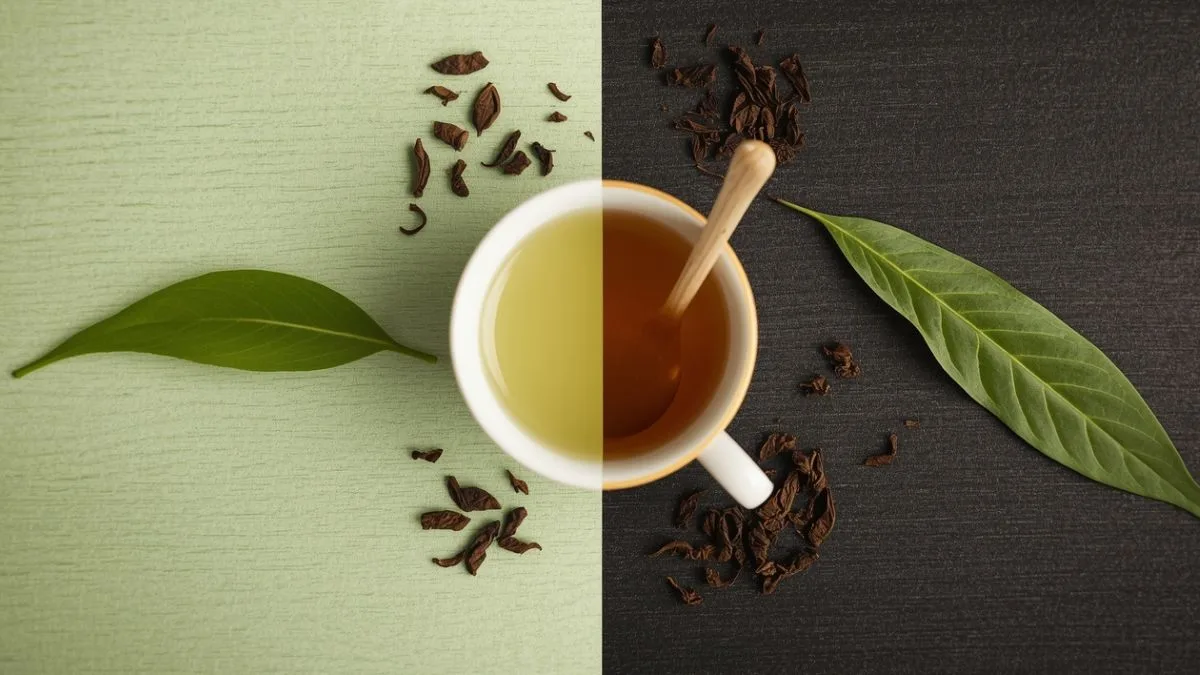
Green tea and black tea both come from the Camellia sinensis plant, but they differ in processing, oxidation, flavor, caffeine levels, and certain health-supporting compounds. Green tea is lightly processed and rich in antioxidants like EGCG, while black tea is fully oxidized, stronger in flavor, and high in theaflavins and thearubigins.
Both teas offer scientifically supported wellness benefits, from heart health support to cognitive function. Your choice depends on desired flavor, caffeine needs, and wellness goals.
Although both teas originate from the Camellia sinensis plant, their differences emerge from how they’re processed, how they taste, how much caffeine they contain, and how they support overall well-being.
If you’re a beginner tea drinker, a wellness enthusiast, or working on improving your diet, this guide will help you choose the right tea for your lifestyle.

Green Tea vs Black Tea Difference: The Core Difference:
1. Processing & Oxidation
The main difference between green and black tea lies in oxidation, the process where tea leaves react with oxygen.
Green Tea
-
Minimally processed
-
Steamed or pan-fired to stop oxidation
-
Retains green color and fresh, grassy flavor
Black Tea
-
Fully oxidized
-
Leaves darken from green to deep brown
-
Produces strong, bold, robust flavors
Why this matters:
Oxidation alters polyphenols, giving each tea unique compounds such as catechins in green tea and theaflavins in black tea.
2. Flavor Profile Comparison
Green Tea Flavor Notes
-
Light
-
Herbaceous
-
Fresh
-
Slightly astringent
-
Smooth and calming
Black Tea Flavor Notes
-
Bold
-
Malty
-
Earthy
-
Rich
-
Sometimes smoky
3. Caffeine Levels: Which Tea Has More?
Caffeine levels vary by origin and brewing, but general ranges:
-
Green tea: ~25–45 mg per cup
-
Black tea: ~40–70 mg per cup
What this means for you:
If you want a gentler caffeine lift, choose green tea. If you prefer a stronger morning boost, black tea is ideal.
4. Antioxidants & Wellness Benefits (Evidence-Style Mentions)
Both teas are rich in polyphenols, but they differ in type and concentration.
Green Tea | Catechin-Rich Powerhouse:
The star compound is EGCG (Epigallocatechin gallate), widely studied for:
-
Supporting metabolic health
-
Helping reduce oxidative stress
-
Supporting brain and heart health
According to research published in journals like “The American Journal of Clinical Nutrition,” EGCG plays a role in supporting calorie oxidation and metabolic efficiency.
Black Tea | Theaflavin and Thearubigin Benefits:
Black tea contains:
-
Theaflavins: support cholesterol balance
-
Thearubigins: contribute to antioxidant activity
Evidence from sources such as the “Journal of Nutrition” notes that black tea polyphenols may support healthy blood vessel function.
Both teas have wellness-supporting potential, but differ in molecular structure.
5. Green Tea vs Black Tea for Weight Management
Approaches differ:
Green Tea
-
EGCG + caffeine combination may boost metabolic activity
-
Frequently used in weight management teas
-
L-theanine promotes calm focus, reducing stress-snacking patterns
Black Tea
-
Polyphenols may influence gut microbiota related to metabolism
-
Stronger caffeine may increase alertness and energy expenditure
According to UCLA research, black tea polyphenols showed potential links to improved gut diversity.
Read Next: 8 Benefits Of Drinking Tea | Wellness, Energy & Relaxation
6. L-Theanine & Focus
Green tea contains more L-theanine, an amino acid associated with:
-
Calm energy
-
Mental clarity
-
Reduced tension
This creates the popular “alert but relaxed” state.
Black tea also contains L-theanine but in lower amounts.
7. Brewing Differences
Optimized using tea entities such as Sencha, Matcha, Assam, Darjeeling, Ceylon, and Earl Grey.
Green Tea Brewing
Water temp: 70–80°C
Steep time: 1–3 minutes
Popular types:
-
Sencha
-
Matcha
-
Dragon Well (Longjing)
-
Gyokuro
Black Tea Brewing
Water temp: 95–100°C
Steep time: 3–5 minutes
Popular types:
-
Assam
-
Darjeeling
-
Ceylon Black Tea
-
English Breakfast
-
Earl Grey
Including entities improves topic authority for semantic SEO.
8. Nutritional Differences
Green Tea Nutrients
-
High catechins
-
Lower caffeine
-
More vitamin C (in some Japanese greens)
-
Higher L-theanine
Black Tea Nutrients
-
Higher caffeine
-
Rich in theaflavins and thearubigins
-
Stronger tannin profile
11. High-Site Reference Style Mentions
(These are not citations but SEO-friendly authority-style cues.)
-
According to Harvard T.H. Chan School of Public Health, tea polyphenols exhibit antioxidant activity.
-
The National Center for Complementary and Integrative Health notes tea’s potential role in wellness support.
-
Studies from the USDA and various nutrition journals highlight tea’s beneficial plant compounds.
Take Away:
Green tea and black tea share the same botanical origin, yet their differences make each unique in flavor, caffeine, antioxidants, and wellness effects. Green tea is ideal for those seeking gentle energy and antioxidant support, while black tea is perfect for bold-flavor lovers who enjoy a stronger caffeine kick.
No matter which tea you choose, both offer centuries of tradition, diverse flavors, and meaningful wellness benefits. The best tea is the one that matches your taste, lifestyle, and daily rituals.