
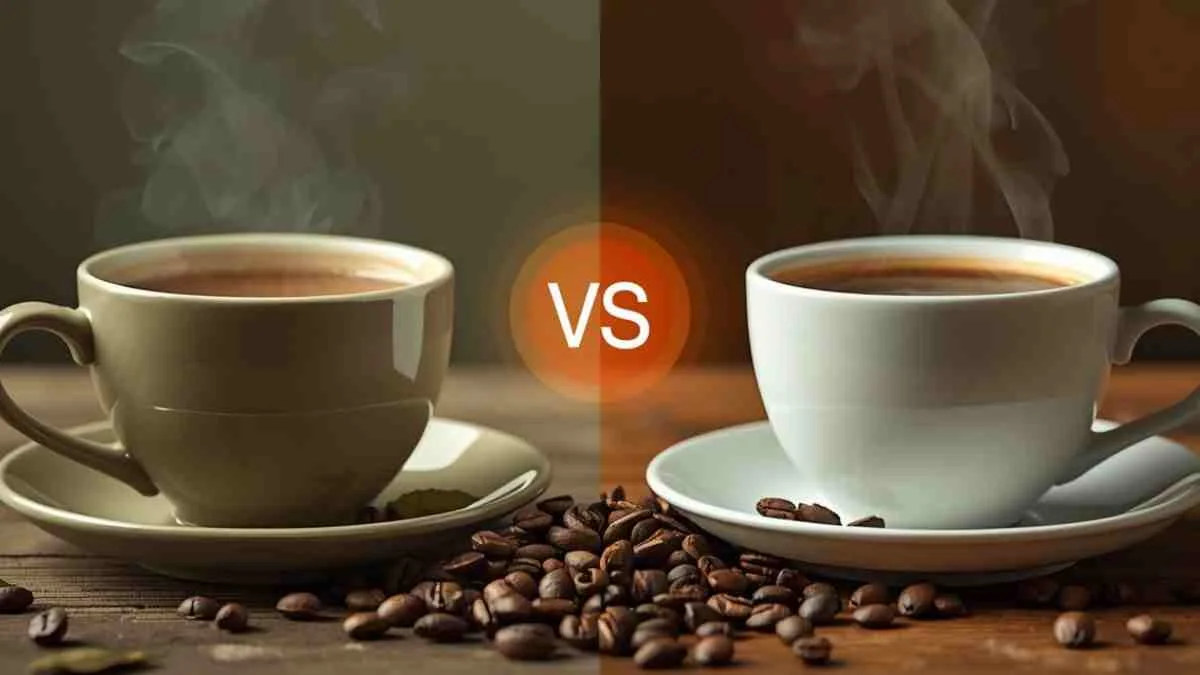
Tea usually has less caffeine than coffee. A typical cup of brewed coffee has 80–100 mg of caffeine, while most teas have 20–60 mg depending on the type.
Many people enjoy both coffee and tea, but when it comes to caffeine, the question always shows up: Does tea have more caffeine than coffee?
Does Tea Have More Caffeine Than Coffee?
The short answer is no, but the full story is a bit more interesting. The amount of caffeine depends on the type of tea, how it’s brewed, processing methods, and even water temperature.
Learn how caffeine works, how different teas compare to coffee, and what science says about their effects.
Caffeine | What It Does and Why It Matters:
Caffeine is a natural stimulant found in plants like coffee beans, tea leaves, cacao, and guarana. It helps improve focus, alertness, and energy.
According to research from sources like Harvard Health Publishing, NIH, and Mayo Clinic, moderate caffeine intake is generally safe for healthy adults.
Average Safe Daily Limit
Most experts, including the U.S. Food and Drug Administration (FDA), say that up to 400 mg of caffeine per day is safe for most adults.
Coffee vs. Tea: Caffeine Levels Explained:

1. Average Caffeine in Coffee
Coffee typically contains more caffeine because coffee beans naturally hold higher concentrations than tea leaves. The brewing method also matters.
Approximate caffeine levels:
-
Brewed coffee (8 oz): 80–100 mg
-
Espresso (1 oz): 60–75 mg
-
Instant coffee (8 oz): 60–80 mg
-
Cold brew (8 oz): 100–150 mg (depending on steeping time)
Coffee is known for delivering a fast, strong energy boost.
2. Average Caffeine in Tea
Tea comes from the Camellia sinensis plant, and caffeine levels vary based on leaf type and how it is processed.
Typical caffeine ranges:
-
Black tea (8 oz): 40–60 mg
-
Oolong tea (8 oz): 30–50 mg
-
Green tea (8 oz): 20–45 mg
-
White tea (8 oz): 15–30 mg
-
Matcha (1 tsp powder): 60–70 mg
-
Herbal tea: 0 mg (chamomile, peppermint, rooibos)
This shows that even strong teas usually fall below coffee in caffeine content.
Why People Think Tea Has More Caffeine Than Coffee:
There are two reasons why this myth exists:
1. Tea leaves naturally contain caffeine
Tea leaves themselves can contain more caffeine per gram than coffee beans. But we use fewer tea leaves to brew a cup of tea, so the final drink ends up with less caffeine.
2. Matcha changes the equation
Matcha is powdered green tea that you drink whole, not steep. Because of this, a cup of matcha can have caffeine levels similar to black tea or even espresso. This leads some people to think “tea is stronger,” but it’s only true for matcha.
How Brewing Impacts Caffeine Levels:
Brewing is an important part of caffeine extraction. According to studies mentioned in publications like ScienceDirect and National Library of Medicine, caffeine increases with:
-
Hotter water (near-boiling temperatures)
-
Longer steeping times
-
Stronger leaf-to-water ratios
That’s why a strong black tea steeped for 5 minutes can contain twice the caffeine of a lightly steeped tea.
Coffee, however, still extracts much higher caffeine regardless of method.
Tea vs. Coffee: How They Make You Feel:
Even though tea usually has less caffeine, many people say tea gives a calmer, smoother energy boost. This is because tea contains L-theanine, an amino acid that promotes relaxation and focus.
A. Tea Energy Profile
-
Gentle rise in energy
-
No sudden crash
-
Better focus
-
Calm alertness
-
Good for long study sessions
B) Coffee Energy Profile
-
Quick spike in energy
-
Strong mental boost
-
Possible jitters or crash
-
Increased heart rate
-
Great for mornings or workouts
Harvard Health and Cleveland Clinic both note that the L-theanine + caffeine combination in tea can improve concentration without overstimulation.
Health Benefits of Tea and Coffee: What Research Says:
A. Benefits of Tea
Research from Harvard School of Public Health, NIH, and European Journal of Clinical Nutrition suggests tea may help with:
-
Antioxidant protection
-
Heart health
-
Weight management support
-
Better brain function
-
Lower stress
-
Improved metabolism
Green tea and black tea are especially high in polyphenols, making them powerful for overall wellness.
B) Benefits of Coffee
Sources like Johns Hopkins Medicine and Mayo Clinic show that coffee may:
-
Support metabolism
-
Improve physical performance
-
Lower risk of type 2 diabetes
-
Improve liver health
-
Provide rich antioxidants
-
Boost cognitive function
Coffee has more caffeine, but it also has thousands of natural compounds that provide health benefits.
Does Tea Have More Caffeine Than Coffee?
| Drink | Caffeine (Average) |
|---|---|
| Brewed Coffee | 80–100 mg |
| Cold Brew | 100–150 mg |
| Espresso | 60–75 mg |
| Black Tea | 40–60 mg |
| Oolong Tea | 30–50 mg |
| Green Tea | 20–45 mg |
| White Tea | 15–30 mg |
| Matcha | 60–70 mg |
| Herbal Tea | 0 mg |
Coffee wins for caffeine content in almost every case, except a few matcha servings.
Which Should You Choose?
Both drinks can be part of a healthy routine. The choice comes down to preference, tolerance, and how you want to feel.
Choose Coffee If:
-
You want a strong morning boost
-
You need higher caffeine
-
You like bold flavors
-
You prefer espresso-based drinks
Read Next: Coffee And Tea | Differences, Benefits, and Which to Choose
Choose Tea If:
-
You want smooth energy
-
You prefer less caffeine
-
You want a calming drink
-
You enjoy variety (black, green, oolong, herbal)
Both beverages are enjoyed worldwide and offer unique health benefits supported by respected research sources like Harvard, NIH, CDC, and Mayo Clinic.